How Consumers Should Shop for Insurance (Without Getting Spammed)
Shopping for insurance should be simple. You need coverage, agents sell coverage, and connecting the two should take a few minutes.
But if you've ever filled out one of those "get a free quote in 60 seconds" forms online, you know that's not how it works. What actually happens is this: your phone starts ringing within minutes, your inbox floods with emails from agents you've never heard of, and for the next several weeks you're dodging calls from unknown numbers.
All because you wanted a car insurance quote.
The good news is that it doesn't have to be this way. There are smarter ways to shop for insurance that keep you in control of the process, protect your personal information, and still connect you with great agents. This guide walks you through exactly how to do it.
The Biggest Mistake Insurance Shoppers Make
The single biggest mistake you can make when shopping for insurance is entering your real phone number and email into a "mass quote" site.
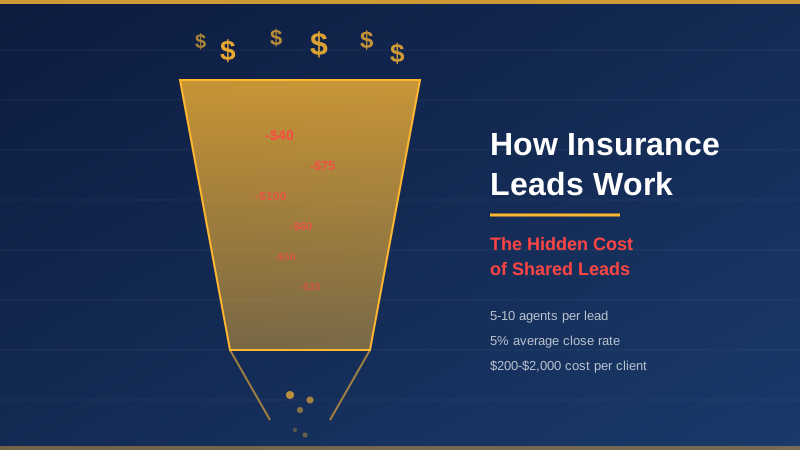
Here's what those sites don't tell you: they're not actually giving you quotes. They're collecting your information and selling it to multiple insurance agents — sometimes 5 to 10 at once. Each of those agents pays for your contact details, and each one is going to call you as fast as possible.
That's why you get bombarded. It's not a glitch. It's the business model.
These platforms make money by selling your data to as many agents as possible. The more agents they sell to, the more revenue they generate. Your experience — the flood of calls, the pressure, the confusion — is a feature of the system, not a bug.
To understand the full mechanics of how this works behind the scenes, take a look at our breakdown of how insurance leads actually work. It's written for agents, but it reveals exactly what happens to your information after you hit "submit."
Step-by-Step: A Better Way to Shop for Insurance
You can absolutely shop for insurance online and find great coverage at a fair price. You just need to be intentional about how you do it. Here's the process that keeps you in control.
Step 1: Decide What You Need Before You Search
Before you type anything into a search bar or visit any website, take five minutes to figure out your basics:
- What type of insurance do you need? Auto, home, renters, life, health, business? Be specific.
- What's your rough budget? You don't need an exact number, but having a ballpark helps you evaluate quotes.
- What matters most to you? Low deductible? Comprehensive coverage? A local agent you can visit in person? Bundling multiple policies?
Having these answers ready means you won't get talked into coverage you don't need, and you can quickly evaluate whether an agent is actually a good fit.
Step 2: Avoid "Mass Quote" Sites
This is the critical step. If a website promises any of the following, proceed with caution:
- "Get quotes from 10+ companies instantly"
- "Compare rates in 60 seconds"
- "Enter your info to see how much you could save"
These phrases are red flags for lead generation sites. They sound helpful, but they're designed to capture your data and sell it.
How to tell the difference: A legitimate insurance company or agent website will let you get a quote directly from them — one company, one agent, one conversation. A lead generation site is a middleman that connects you with multiple agents by distributing your contact information.
If you're not sure, check the fine print at the bottom of the page. Lead generation sites often include disclaimers like "by submitting this form, you consent to being contacted by multiple insurance professionals" or "your information may be shared with our partner network."
Step 3: Use Agent Marketplaces Instead
A much better approach is to use a platform that lets you browse and choose agents, rather than having agents chase you.
Agent marketplaces work differently from lead generation sites. Instead of collecting your data and distributing it, they let you:
- Browse agent profiles in your area
- Read reviews from other customers
- Compare specialties and credentials across multiple agents
- Choose who to contact — on your terms, when you're ready
This is a fundamentally different experience. You're in the driver's seat. No one gets your phone number until you decide to share it.
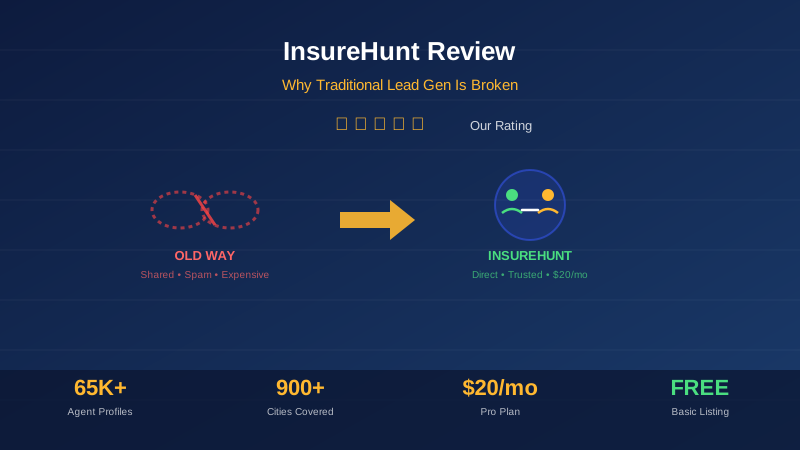
Platforms like InsureHunt are built specifically around this model. You search by insurance type and location, browse local agent profiles with verified Google reviews, and reach out only to the agents who look like a good fit. No forms that trigger a flood of calls. No data selling. You control the entire process.
For a detailed look at how InsureHunt compares to traditional lead generation platforms, check out our full review.
Step 4: Talk to 2-3 Agents (Not 10)
You don't need quotes from a dozen agents to make a good decision. In fact, talking to too many agents usually makes things worse:
- Information overload — Ten different quotes with different coverage structures becomes impossible to compare meaningfully.
- Decision paralysis — The more options you have, the harder it is to choose. Research consistently shows that too many choices leads to worse decisions.
- Wasted time — Every conversation takes 15 to 30 minutes. Ten agents means 3 to 5 hours of your time.
Two to three agents is the sweet spot. Enough to compare options and pricing, but manageable enough that you can have real conversations and ask questions.
When choosing which agents to talk to, look for:
- Strong reviews from customers with situations similar to yours
- Relevant specialties — an agent who focuses on your insurance type will typically provide better guidance
- Local presence — they understand your state's regulations and your area's specific risks
- Responsiveness — how quickly and professionally they reply to your initial outreach says a lot about how they'll handle your account
Why Local Agents Still Matter
In a world of online everything, you might wonder why you'd bother with a local agent at all. Can't you just buy insurance directly from a website?
You can. But here's why local agents still provide significant value:
State regulations vary widely. Insurance is regulated at the state level, and requirements differ dramatically. A local agent knows the minimums, the common gaps, and the specific endorsements that matter in your state.
Risk profiles are local. Flood zones, wildfire risk, hail corridors, crime rates — all of these affect your coverage needs and pricing. An agent who works in your area understands these risks intuitively. A national call center doesn't.
Claims support matters. When you need to file a claim, having a local agent who can walk you through the process, advocate on your behalf, and even meet you in person makes a real difference. A 1-800 number won't do that.
Bundling and customization. Local independent agents often represent multiple carriers, which means they can build a package across auto, home, umbrella, and life that's optimized for your specific situation. Direct-to-consumer websites typically sell one product from one company.
Accountability. A local agent has a reputation in the community. They depend on referrals and reviews. That creates a natural incentive to provide excellent service — something you won't get from a faceless online form.
What Insurance Shopping Should Actually Feel Like
Here's a simple test: if shopping for insurance feels like being chased, something is wrong.
The experience should feel like:
- Browsing, not being hunted. You look at options on your schedule, at your pace. Nobody's calling you at 8am because they bought your phone number.
- Choosing, not being assigned. You pick the agent who looks right for you. Not the one who happened to dial fastest.
- Learning, not being pressured. A good agent educates you about coverage options and helps you make an informed decision. They don't rush you into signing before you've had time to think.
- One conversation, not fifteen. You talk to the agents you selected. That's it. Your phone doesn't become a spam magnet.
This is what platforms like InsureHunt are designed to deliver. The entire model is built around giving you control — you browse, you compare, you choose, you reach out. No middleman selling your data. No surprise calls from strangers.
It's how shopping for a professional service should work, and it's how more and more consumers are finding their insurance agents.
What to Do If You've Already Been Spammed
If you've already submitted your information to a lead generation site and the calls won't stop, here are some practical steps:
- Don't answer unknown numbers for a few days. Most agents will stop calling after 3 to 5 attempts.
- Block persistent callers. Both iPhone and Android make it easy to block individual numbers.
- Register on the Do Not Call list at donotcall.gov. It won't stop all calls immediately, but it gives you legal recourse.
- Check your email for opt-out links. Most marketing emails are required to include an unsubscribe option. Use it.
- Reply to texts with "STOP." Under federal law, this should remove you from text marketing lists.
The calls will taper off, usually within a week or two. But the experience is a good reminder of why it's worth being selective about where you share your information in the first place.
Your Insurance Shopping Checklist
Before you start shopping, run through this quick checklist:
- I know what type of insurance I need
- I have a rough budget in mind
- I've identified my top priorities (price, coverage, local agent, specific carrier)
- I'm using an agent marketplace, not a mass-quote site
- I've identified 2-3 agents to contact based on reviews and profiles
- I'm prepared to ask questions about coverage, not just price
If you're working with an agent and want to make sure the process goes smoothly from day one, our client onboarding checklist walks through what to expect after you've chosen your coverage.
Final Thoughts
You shouldn't have to sacrifice your privacy, your peace of mind, or your phone's sanity just to get an insurance quote. The old way — fill out a form, get spammed by strangers — is broken, and consumers are increasingly refusing to put up with it.
The better approach is straightforward:
- Know what you need before you start searching
- Avoid mass-quote sites that sell your data
- Use agent marketplaces that put you in control
- Talk to a few good agents, not a dozen random ones
- Choose based on fit, not just price
Shopping for insurance can actually be a calm, informed, even pleasant experience — as long as you stay in the driver's seat.
Ready to shop for insurance on your terms? Browse local agents for free on InsureHunt.com — no forms, no spam, no surprises. Just agents you can review, compare, and choose.